Stop Dogs Chewing Furniture: Fast 7-Day Fix Plan
Stop Dog Chewing Furniture Fast: A Step-by-Step Plan That Works
Furniture chewing is usually a mix of normal dog behavior and a missing need—teething relief, stress reduction, boredom, or lack of supervision. The fastest fix combines immediate interruption, safer chew options, and a simple training routine that makes the right choice easy and rewarding. Use the steps below to stop damage today while building habits that last.
Why Dogs Chew Furniture (So the Fix Matches the Cause)
- Teething and mouth discomfort: common in puppies; chewing relieves pressure and soothes sore gums.
- Boredom and under-exercise: high-energy dogs invent their own activities when their day is too quiet.
- Separation anxiety or stress: chewing can be self-soothing when alone or overstimulated (see AVSAB resources on behavior at AVSAB).
- Attention-seeking: if chewing reliably triggers a big reaction, it can repeat because it “works.”
- Hunger, nausea, or medical issues: less common, but rule out pain, GI upset, or dental problems when chewing is sudden or intense.
Fastest Actions to Stop Chewing Today
- Interrupt calmly: use a brief “ah-ah” or “leave it,” then guide away—avoid yelling or chasing, which can turn it into a game.
- Swap, don’t snatch: offer a legal chew and praise the moment your dog takes it.
- Block access immediately: close doors, use baby gates, crate/pen for short periods, and pick up tempting items.
- Add supervision structure: if eyes aren’t on the dog, the dog is in a safe zone (crate/pen) with an appropriate chew.
- Use taste deterrents on safe surfaces: apply a pet-safe bitter deterrent to furniture edges (test a hidden spot first).
- Increase same-day enrichment: a brisk walk + 10 minutes of training + a food puzzle can reduce chewing urges quickly (ASPCA notes chewing is often normal but needs guidance: ASPCA Destructive Chewing).
A Practical 7-Day Plan to Replace Furniture Chewing
- Day 1–2: Management reset—block rooms, leash indoors as needed, and provide 2–3 chew options with different textures.
- Day 3–4: Train “Leave it” and “Place”—short sessions (3–5 minutes) repeated 2–3 times daily.
- Day 5: Build alone-time skills—practice brief departures with a long-lasting chew; return before distress escalates.
- Day 6: Add “permission to chew” moments—cue “Take it” with an approved chew and reward calm chewing.
- Day 7: Reduce barriers gradually—open access for short supervised intervals; if chewing resumes, revert to management and increase enrichment.
Chewing Trigger → Best Immediate Response
| Trigger | What it looks like | Best immediate action | Long-term fix |
|---|---|---|---|
| Teething/young puppy | Gnawing corners, frequent mouthiness | Swap to a chilled rubber chew; praise | Rotate textures; short training; vet-approved teething support |
| Boredom | Chews after naps or when household is busy | Redirect to puzzle feeder or sniff game | Increase daily exercise + enrichment schedule |
| Separation stress | Chews near doors/windows; drooling/pacing | Short crate/pen session with long-lasting chew | Graduated departures; consult a trainer/vet for anxiety plan |
| Attention-seeking | Chews only when people are present | Quietly redirect and reward correct behavior | Reinforce calm behaviors; remove the payoff of big reactions |
Training Essentials: Leave It, Trade, and Settle
- Leave it (food in hand): present a closed fist with a treat; reward when your dog backs off; then practice around low-value items before generalizing to furniture.
- Trade game: offer a high-value treat in exchange for releasing an item. This prevents tug-of-war conflicts and helps reduce guarding.
- Settle on a mat: reward your dog for lying calmly on a designated spot, especially during cooking, kid chaos, deliveries, or TV time (peak chewing opportunities).
- Reward timing matters: praise and treat within 1–2 seconds of choosing the chew toy or moving away from furniture so your dog links the reward to the right decision.
Chew Options and Enrichment That Reduce Destruction
- Match toughness to your dog: aggressive chewers generally do better with durable rubber/nylon; light chewers may prefer softer textures.
- Rotate chews to keep novelty: keep two out and store the rest; swap every 1–2 days so “legal chews” stay interesting.
- Food-stuffed toys: mix kibble with a small amount of wet food or dog-safe yogurt, stuff, and freeze for longer engagement.
- Scent work at home: scatter kibble in a snuffle mat or hide treats around one room to burn mental energy fast.
- Daily baseline: aim for a mix of physical exercise, sniffing time, and brief training sessions. AKC has a helpful overview on chewing behavior at American Kennel Club.
Make the Environment Chew-Proof (Without Living in a Fortress)
When Chewing Signals a Bigger Problem
A Simple Guide That Pulls It All Together
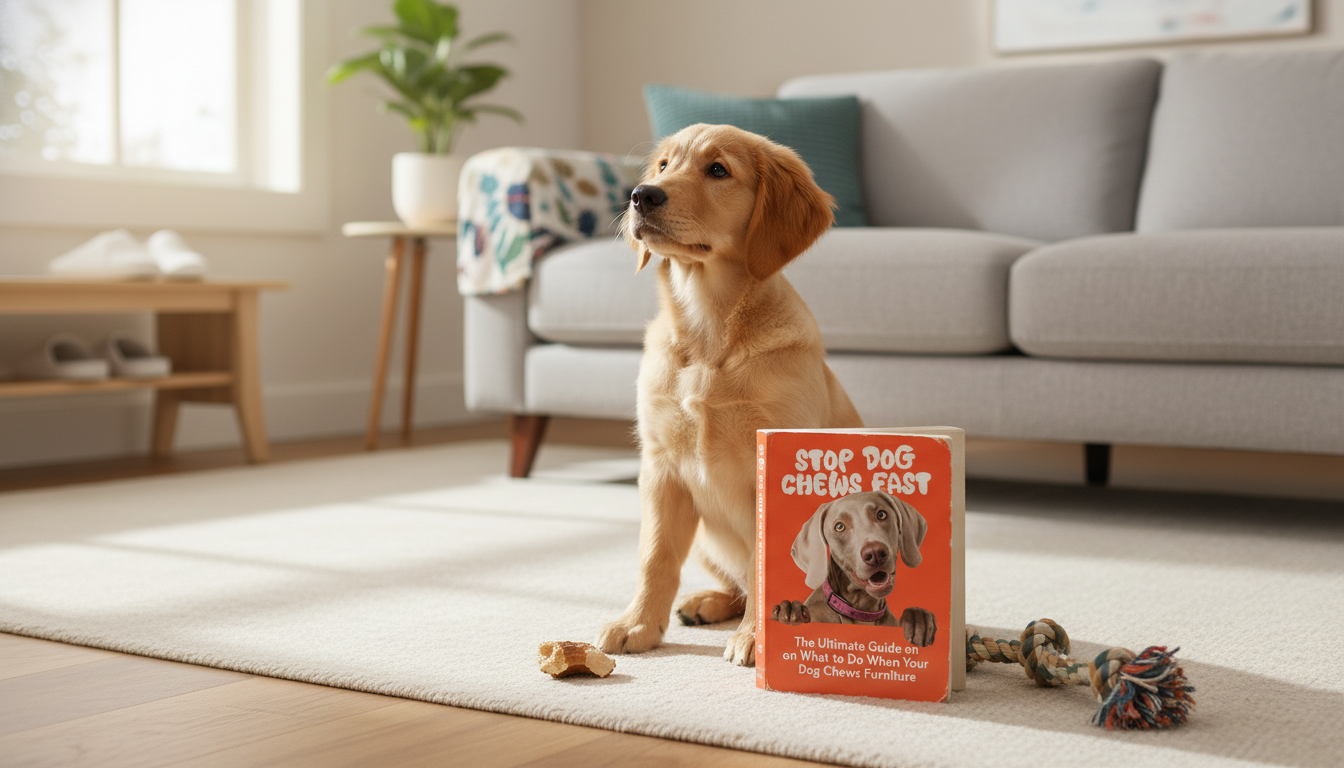
- Stop Dog Chews Fast: The Ultimate Guide on What to Do When Your Dog Chews Furniture (digital guide) organizes quick checklists for management, training cues, and daily schedules so you can stick to a plan during busy weeks.
- A Practical Guide to Calming Your Nervous System: Effective Techniques to Calm Nervous System & Restore Inner Peace can be a helpful companion if the chewing is happening during stressful seasons—steady, calm handling speeds up dog training more than most people expect.
FAQ
How do you stop a dog from chewing furniture when home alone?
Use management (crate/pen or a gated safe room), provide a long-lasting approved chew or stuffed toy, and practice short departures that gradually increase. Avoid giving full access to furniture until calm alone-time is reliable.
Do bitter sprays work to stop furniture chewing?
They can help as a temporary layer, but they work best alongside supervision, redirection to appropriate chews, and training. Test on a hidden area first and reapply as directed.
When should a vet or trainer be involved for chewing?
Get help if chewing is sudden, obsessive, paired with anxiety signs, involves swallowing objects, or includes growling/guarding. A vet can rule out medical causes, and a qualified trainer can build a safe behavior plan.











Leave a comment