Calm-Down Checklist: Fast Relaxation Exercises for Anxiety
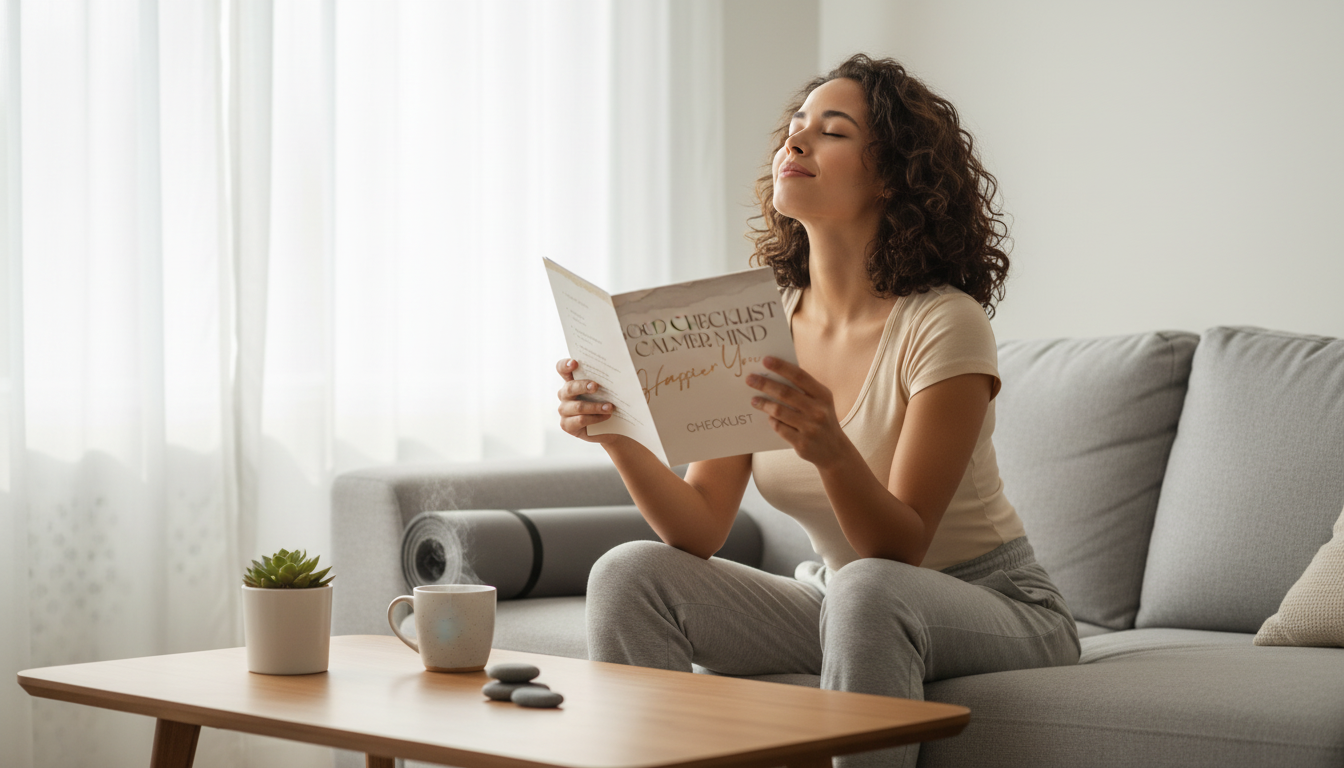
Feel-Good Checklist for a Calmer Mind and Happier You: Relaxation Exercises for Anxiety
A calmer mind often comes from small, repeatable actions that signal safety to the nervous system. This feel-good checklist turns proven relaxation techniques into quick steps that fit real life—whether anxiety shows up as racing thoughts, a tight chest, or constant tension. Use it as a daily reset, a pre-sleep wind-down, or a “right now” plan when stress spikes.
Why a checklist helps when anxiety takes over
When anxiety rises, the brain tends to narrow its focus and overestimate threat. A simple checklist can help interrupt that spiral by making “what to do next” obvious and doable.
- Reduces decision fatigue by replacing “What should be done?” with a simple sequence
- Creates predictability, which can lower perceived threat and help the body downshift
- Supports consistency: small actions repeated daily tend to work better than occasional big efforts
- Builds awareness of triggers and early signs (tight shoulders, shallow breathing, rumination) so interventions happen sooner
For a helpful overview of how anxiety can affect daily life and the body’s stress response, see the National Institute of Mental Health (NIMH) guide to anxiety disorders and the American Psychological Association (APA) overview of stress effects on the body.
A quick “right now” calm-down sequence (5–7 minutes)
This is a compact sequence meant for the moment you notice anxiety building—before it snowballs. Move through it gently; the goal is to communicate “I’m safe enough right now.”
- Grounding: name 5 things you can see, 4 you can feel, 3 you can hear, 2 you can smell, 1 you can taste to anchor attention.
- Breathing: inhale gently through the nose, then exhale longer than the inhale for 10–12 cycles (no forcing).
- Muscle release: unclench the jaw, drop the shoulders, soften the belly; then tense and release the hands for 3 rounds.
- Orienting: slowly look around the room and notice neutral details (shapes, colors, corners, light) to help your brain register safety.
- Close with one small next step: drink water, step outside for 60 seconds, or write a single to-do item.
If you prefer a structured breathing approach, the NHS breathing exercises for stress page includes easy options you can test and keep.
Feel-good checklist: choose 3 from each category
Think of this as building a “calm menu.” You’re not trying to do everything—just enough to shift your state. Pick three from each category (or start with one per category when you’re overwhelmed).
Breath & body
- Paced breathing (longer exhales)
- Progressive muscle relaxation
- Gentle neck/shoulder stretches
- Brief walk
Mind
- 2-minute brain-dump
- “Name the worry” labeling
- Short guided meditation
- Thought defusion (example: “I’m having the thought that…”)
Environment
- Dim lights
- Tidy one small surface
- Open a window
- Lower noise
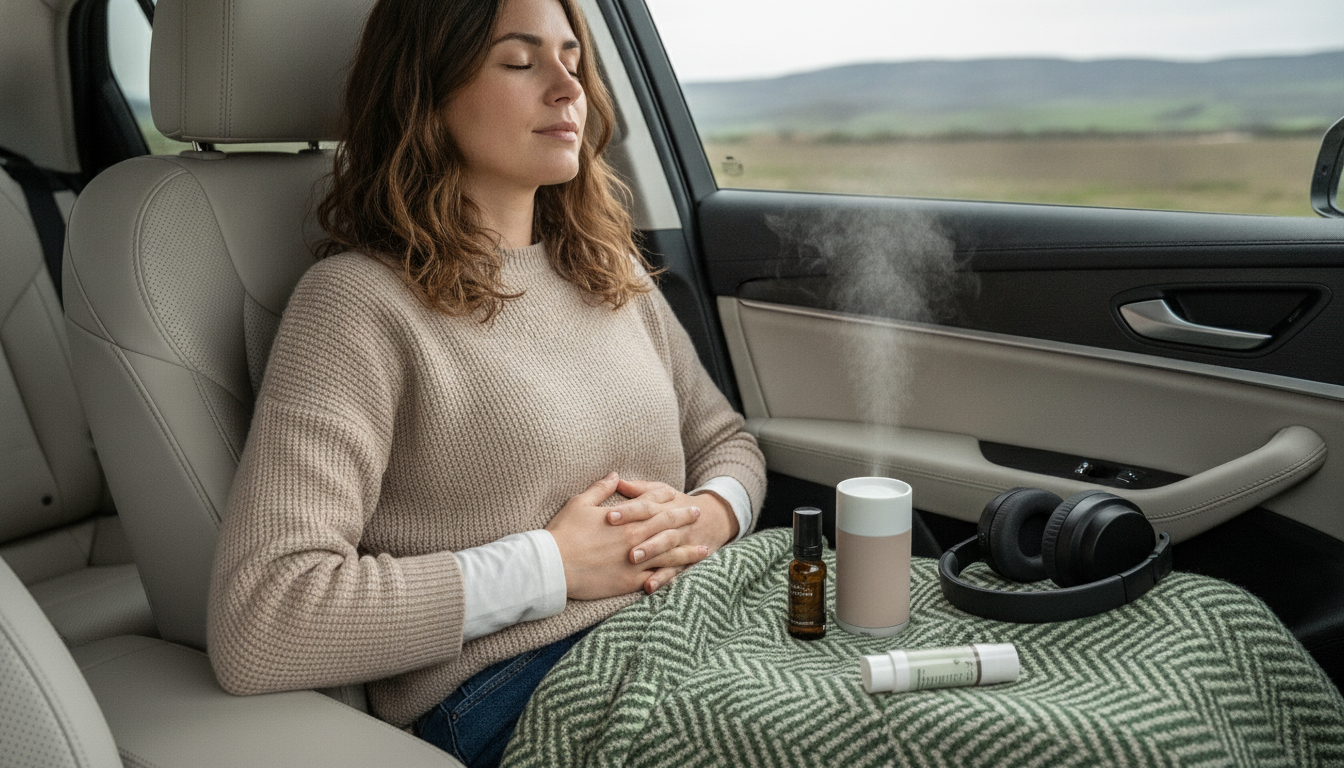
- Comforting scent
Connection & care
- Text a supportive person
- Pet time
- Warm drink
- Quick shower
- Soothing music
Sleep support (even daytime)
- Limit caffeine after midday
- 10-minute screen break
- Consistent wind-down cue
Pick-your-path calm plan
| When anxiety feels like… | Try first (2 minutes) | Then add (5–10 minutes) |
|---|---|---|
| Racing thoughts | 2-minute brain-dump + label the main worry | Paced breathing + short guided meditation |
| Tight chest or shallow breathing | Longer exhales (inhale 4, exhale 6–8) | Progressive muscle relaxation (upper body focus) |
| Restlessness | 60–90 seconds of brisk walking or marching in place | Gentle stretch + grounding exercise |
| Irritability/overwhelm | Lower stimulation (dim lights, reduce noise) + sip water | Comfort routine (warm drink, music) + 10-minute tidy |
| Pre-sleep worry | Write tomorrow’s top 3 tasks | Wind-down cue (shower/tea) + breathing in bed |
Relaxation exercises that pair well with the checklist
These exercises layer well with the checklist because they work with both the body (downshifting arousal) and attention (reducing spirals).
- Progressive Muscle Relaxation (PMR): tense each muscle group for about 5 seconds, release for about 10 seconds; move from feet to face.
- Box breathing alternative for anxiety: keep the exhale longer than the inhale if breath-holding increases discomfort.
- Guided imagery: visualize a safe place using sensory details; keep attention on sounds, textures, and temperature.
- Cold splash or cool cloth: brief cooling on the face can help interrupt a panic surge for some people.
- Mindful movement: slow stretching or yoga-style poses with steady breathing; avoid pushing into pain.
Make it stick: simple routines for morning, midday, and evening
Consistency is what turns “a good idea” into real relief. Use small time blocks so you’ll actually do them on busy days.
Morning (3–5 minutes)
- Get light exposure near a window
- Do 10 longer exhales
- Choose today’s 3 checklist actions (keep them realistic)
Midday (2–8 minutes)
- Reset posture and drop the shoulders
- Unclench the jaw and relax the tongue
- Take a short walk or do PMR for hands/shoulders
Evening (10–20 minutes)
Track patterns
When anxiety feels unmanageable
A ready-to-use printable checklist option
If you want a ready-made version, try
Feel-Good Checklist for a Calmer Mind and Happier You – Relaxation Exercises for Anxiety.
For deeper support around stress physiology and daily habits, pair it with
Calm Your Body, Clear Your Mind, Balance Your Life: A Complete Guide to Natural Remedies for Cortisol Reduction.
FAQ
How to relax mind from stress and anxiety
Start with 10 slow breaths where the exhale is longer than the inhale, then do the 5-4-3-2-1 grounding exercise. Finish with a 2-minute brain-dump and reduce stimulation (dim lights, lower noise), adding a brief walk if you still feel “wired.”
How to relax your mind and body from anxiety
Combine breath with muscle release: use longer exhales for a few minutes, then do progressive muscle relaxation or gentle stretching. Support the shift with water, a lower-stimulation environment, and a consistent calming cue (like a warm drink or shower) so your body learns the routine.






Leave a comment