Break the Tension: Fast Stress Relief That Works in Minutes
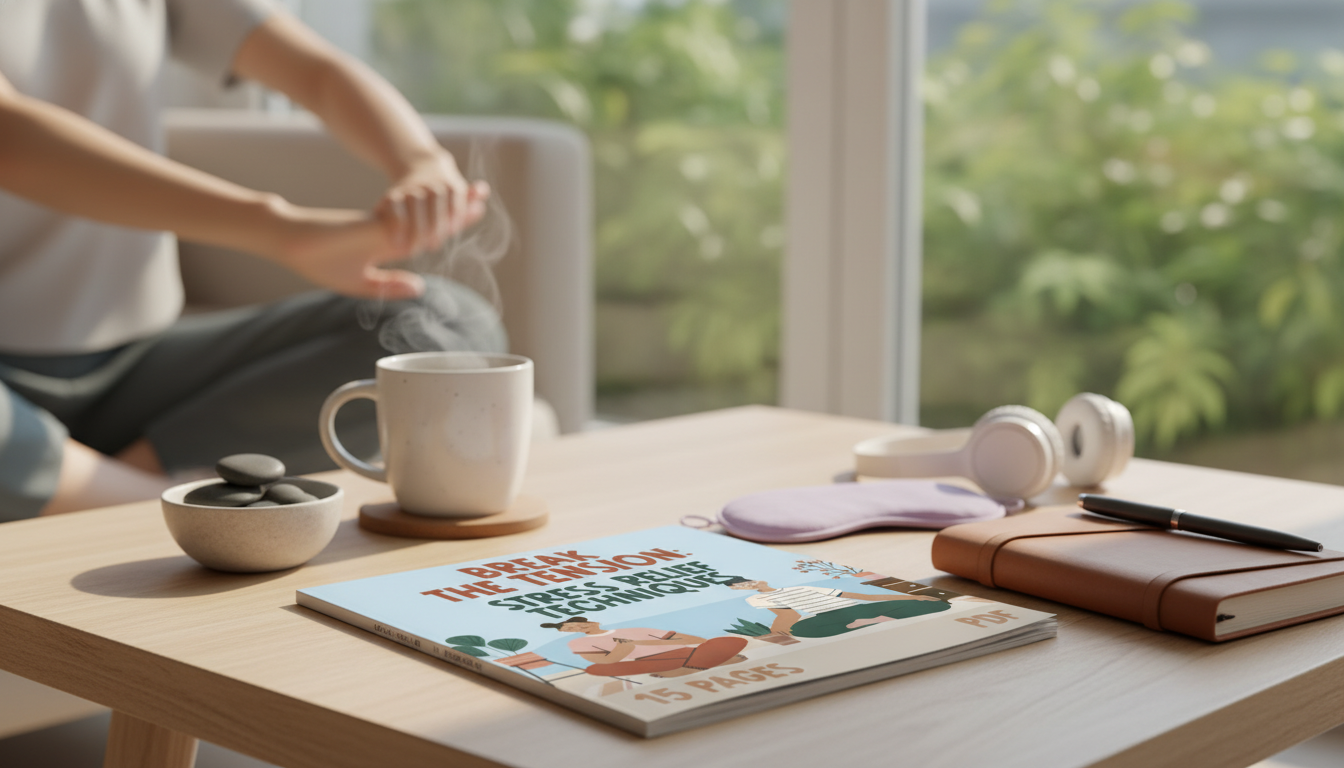
Spot the Early Signals of Tension
Stress rarely shows up all at once. More often, it accumulates as subtle tension that turns into a short fuse, a scattered mind, or a body that feels “on” even when nothing is happening. Catching those early signals gives you a chance to reset before stress spikes.
Common early cues
- Physical: clenched jaw, headaches, tight chest, shallow breaths, stomach flutter, restless legs.
- Mental: looping thoughts, difficulty prioritizing, catastrophizing, forgetfulness, decision fatigue.
- Behavior: snapping at others, procrastination, doom-scrolling, overeating/undereating, insomnia.
Try a 15-second check-in: rate your stress from 0–10, notice where it sits in your body (jaw, chest, belly, shoulders), then choose one quick technique below before it escalates.
Breathing Exercises for Rapid Calm
Breathing is one of the fastest ways to shift your nervous system because it’s both automatic and under your control. The goal isn’t “perfect breathing”—it’s a small downshift you can repeat anytime.
- Physiological sigh (30–60 seconds): inhale through the nose, top up with a second short inhale, then exhale long and slow; repeat 3–5 times to downshift arousal.
- Box breathing (2–4 minutes): inhale 4, hold 4, exhale 4, hold 4; keep shoulders relaxed and jaw unclenched.
- Extended exhale (2–3 minutes): inhale 4, exhale 6–8; lengthening the exhale often reduces the “wired” feeling.
- 4-7-8 variation (as tolerated): inhale 4, hold 7, exhale 8; reduce counts if lightheaded—comfort beats intensity.
- Micro-reset at a desk: feet on floor, exhale fully first, then take three slow breaths with a longer exhale than inhale.
| Situation | Technique | How long | Best cue to start |
|---|---|---|---|
| Racing thoughts before a meeting | Box breathing 4-4-4-4 | 2–4 min | When mind jumps ahead to outcomes |
| Sudden spike of anxiety | Physiological sigh | 30–60 sec | When chest feels tight or breath gets shallow |
| Irritability and tension | Extended exhale 4-in / 6–8-out | 2–3 min | When jaw/shoulders tighten |
| Late-day overstimulation | Slow nasal breathing | 3–5 min | When noise/light feels “too much” |
For additional evidence-based guidance on breathing and stress, the NHS breathing exercises for stress and the American Psychological Association’s stress resources offer helpful overviews.
Quick Meditations That Fit Real Life
Meditation doesn’t need a cushion, silence, or a long session. These “micro-practices” train attention to return to the present—especially when your brain is spinning up stories.
- One-minute anchor: focus on the sensation of breathing at the nostrils; when distracted, label “thinking” and return.
- Body scan in 3 steps (2–4 minutes): forehead/eyes soften, shoulders drop, belly relax; repeat twice.
- Sound meditation (2 minutes): listen for the farthest sound, then the nearest; this gently pulls attention away from rumination.
- Loving-kindness mini (90 seconds): repeat silently “May I be safe. May I be calm. May I be steady.” Then extend to someone else.
- Transition ritual: after work tasks, sit still for 60 seconds, breathe slowly, and name the next activity (e.g., “dinner,” “walk,” “rest”).
If you’re curious about safety and effectiveness, the NCCIH overview of meditation and mindfulness is a practical reference.
Grounding Techniques to Interrupt Spirals
Grounding is for the moments when stress feels like it’s hijacking your attention—when you can’t “think your way out” and need to re-orient to what’s real, right now.
- 5-4-3-2-1 sensory grounding: name 5 things seen, 4 felt, 3 heard, 2 smelled, 1 tasted; speak quietly or write it down.
- Feet and seat method (30 seconds): press feet into the floor and notice the chair supporting your body; add a long exhale.
- Temperature shift: hold a cool object or splash cool water on wrists; notice the sensation as an attention reset.
- Orientation statements: say the date, location, and what is safe right now; helpful when stress feels disorienting.
- Tension release: squeeze fists for 5 seconds, release for 10; repeat 3 times to signal “stand down.”
Small tip: pair any grounding tool with one slow exhale first. That single breath often makes the technique “stick” faster.
Time Management Moves That Lower Stress at the Source
Fast resets are great, but stress often rebuilds when everything feels urgent. These time-management moves reduce overwhelm by narrowing focus and minimizing constant context switching.
Build a 7-Day “Break the Tension” Routine
Tools to Keep These Techniques Handy
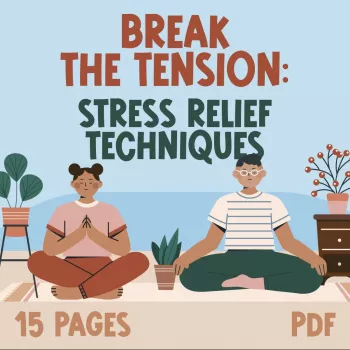
- Break the Tension: Stress Relief Techniques – Breathing Exercises, Quick Meditations, Grounding Techniques, and Time Management Tips to Reduce Stress ($8.99)
- A Practical Guide to Calming Your Nervous System: Effective Techniques to Calm Nervous System & Restore Inner Peace ($8.99)
When to Get Extra Support
FAQ
What is the fastest stress relief technique in the moment?
The physiological sigh is often the quickest: inhale through your nose, take a second small “top-up” inhale, then exhale long and slow; repeat 3–5 times. If you feel wired rather than panicky, try an extended exhale (inhale 4, exhale 6–8) for 2–3 minutes. Stop or reduce counts if you become lightheaded.
How often should breathing exercises or short meditations be practiced?
A realistic target is 1–3 short sessions daily (1–5 minutes), plus “as needed” during stressful moments. Practicing when you’re already calm helps your body recognize the pattern faster under pressure. Consistency matters more than duration.
Do grounding techniques help with anxiety spirals?
Yes—grounding shifts attention from rumination to present-moment sensory information, which can reduce the momentum of an anxiety spiral. For example, do 5-4-3-2-1 by naming five things you see, four you feel, three you hear, two you smell, and one you taste. Pair it with one slow exhale to settle your body while you re-orient.









Leave a comment