Mind Relaxation & Inner Peace: Simple Daily Reset Plan
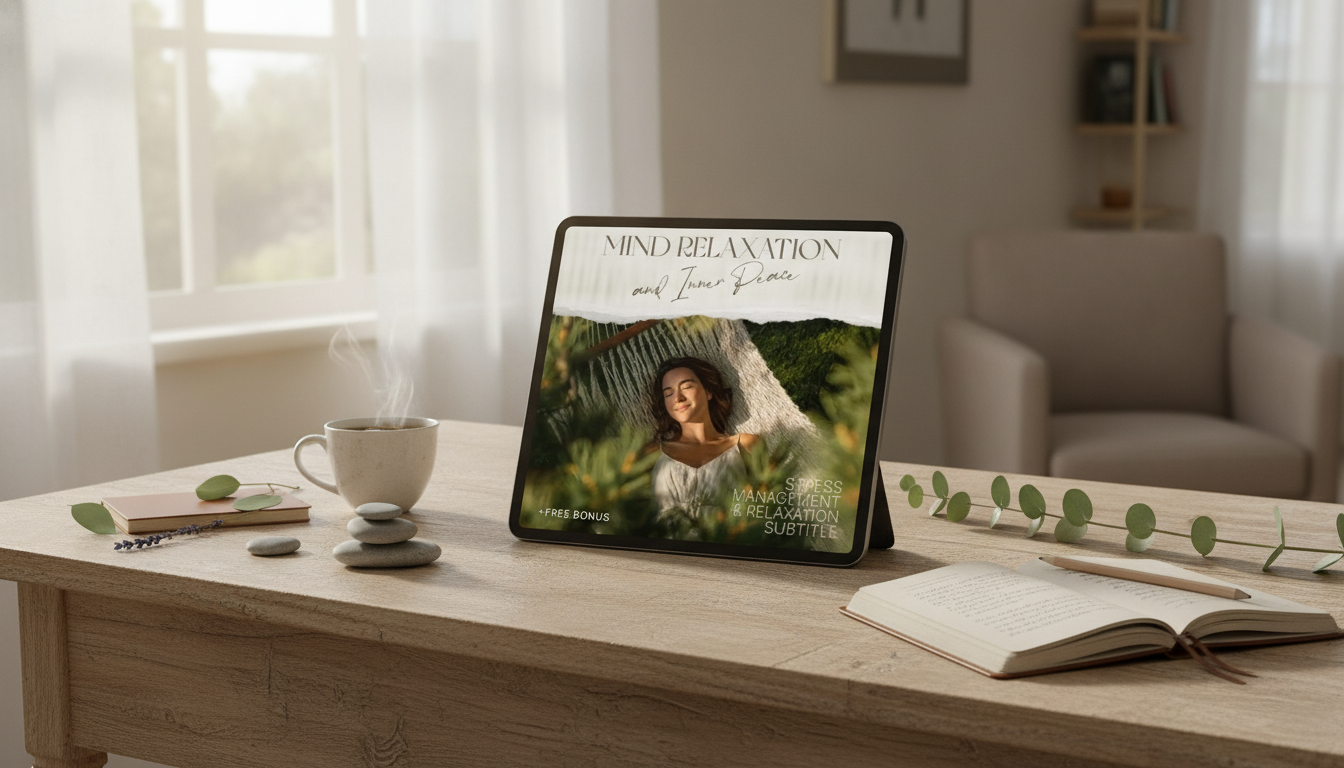
A practical path to mind relaxation and inner peace
A calmer mind is built through repeatable habits, not willpower alone. When stress is high, the goal isn’t to “never feel anxious”—it’s to recover faster, think more clearly, and return to a steadier baseline with simple routines you can actually repeat. For a structured set of short practices and guided routines, see Your Practical Guide to Mind Relaxation and Inner Peace – eBook for Stress Relief and Personal Growth.
What “mind relaxation” looks like in everyday life
Mind relaxation often shows up in small, practical signs: your internal dialogue slows down, your attention stays on one thing longer, and you pause before reacting. Many people also notice that falling asleep becomes easier because the mind stops “replaying” the day on a loop.
Common blockers are surprisingly predictable: constant notifications that keep your nervous system on alert, unresolved worry loops that feel urgent but go nowhere, perfectionism that turns rest into another performance, and inconsistent recovery time (crash-and-burn weekdays followed by catch-up weekends).
Inner peace functions like a skill. You strengthen it through repetition: attention training (returning to a single anchor), emotional regulation (naming what’s happening without spiraling), and self-compassion (reducing the extra layer of stress caused by self-criticism). A realistic goal is moving from “stressed most of the day” to “stressed, then recovered faster.” Over time, that shift changes how your whole day feels.
For a helpful baseline definition of stress and why it affects the body and mind together, the APA Dictionary of Psychology offers a clear overview.
A simple daily framework: calm the body, settle the mind, then reset the story
When you’re overwhelmed, trying to “think your way out” can backfire. A more reliable sequence is: regulate the body first, then focus attention, then reframe the mental storyline.
Step 1 — Calm the body (1–5 minutes)
Use slow breathing, gentle muscle release, and a quick posture reset. This lowers physical arousal so the mind has a chance to follow. Keep it easy—no breath-holding strain, no forcing calm.
Step 2 — Settle attention (2–10 minutes)
Choose one anchor: breath sensations, ambient sound, or physical sensations (feet on the floor, hands resting). Each time you notice you’ve wandered, return. That “return” is the repetition that trains your attention.
Step 3 — Reset the story (2–8 minutes)
Name the worry plainly (“I’m worried about tomorrow’s meeting”). Choose the next useful thought (“I can prepare one key point”). Then define one small next action (open a doc and draft three bullets). This converts mental noise into movement without pressure.
| Practice | Time | Best for | How it works (in one line) |
|---|---|---|---|
| Box breathing (4-4-4-4) | 2–4 min | Acute stress spikes | Balances breath rhythm to support calm and clarity |
| Progressive muscle relaxation | 5–10 min | Physical tension, restlessness | Releases stored muscle guarding to signal safety |
| 5-4-3-2-1 grounding | 2–5 min | Anxiety spirals | Shifts attention from thoughts to present sensory input |
| Body scan | 6–12 min | Overthinking, bedtime | Trains non-judgmental awareness and reduces rumination |
| Worry container + next action | 3–7 min | Persistent worry loops | Limits worry time and converts it into one doable step |
Core techniques for stress relief that stay practical
Breathing that actually feels calming
Progressive muscle relaxation (PMR)
Mindfulness without pressure
Mindfulness isn’t a blank mind. It’s noticing your attention wandered and returning to your anchor—again and again. If you’re new, shorter sessions are often more sustainable. For evidence-based context and safety notes, see the National Center for Complementary and Integrative Health.
Micro-meditations between tasks
Journaling prompts that reduce mental noise
Building inner peace through personal growth habits
Personalizing the routine: choose the right practice for the moment
What’s inside the eBook and how to use it for steady progress
Your Practical Guide to Mind Relaxation and Inner Peace – eBook for Stress Relief and Personal Growth is built for real schedules: clear step-by-step exercises for stress relief, emotional balance, and everyday mental clarity, plus guided routines for mornings, work breaks, and evenings to reduce decision fatigue.
Supportive add-ons that pair well with mind relaxation
- Stress physiology support: Understanding recovery cycles can make your practice feel more concrete. Calm Your Body, Clear Your Mind, Balance Your Life: A Complete Guide to Natural Remedies for Cortisol Reduction pairs well with daily calming routines.
- Nutrition and routine: Stable meals and hydration can reduce irritability and energy dips that mimic anxiety. Healthy Meal Plan & Recipe Collection supports a steadier day.
- Financial stress relief: Background money worry drains attention. A basic system helps free mental bandwidth—see Personal Finance Made Easy Ebook – Budgeting, Saving, Investing & Debt Management Guide for Financial Freedom.
- Keep changes small: Add one supportive habit per week so your system doesn’t feel overwhelmed.
For sleep-friendly relaxation basics, the National Sleep Foundation offers practical guidance you can combine with evening wind-down routines.
FAQ
How long does it take for relaxation practices to start working?
Many techniques can lower acute stress within minutes, especially breathing and muscle release. Stronger, more consistent results typically show up after 2–4 weeks of daily practice, even if your sessions are short.
Can these techniques help with sleep when the mind won’t switch off?
Yes—use a short wind-down sequence: a screen cutoff, then a body scan or progressive muscle relaxation, followed by slower exhale breathing. Finish with a quick “tomorrow list” so your brain doesn’t keep rehearsing tasks in bed.
What if meditation makes anxiety feel louder at first?
That can happen at the beginning, especially if you’re used to staying busy to avoid feelings. Start with body-based calming (grounding, muscle release), keep sessions brief, try eyes open, and seek professional support if anxiety feels severe or unmanageable.












Leave a comment