Learning to Learn: Classroom Example & Study Cycle
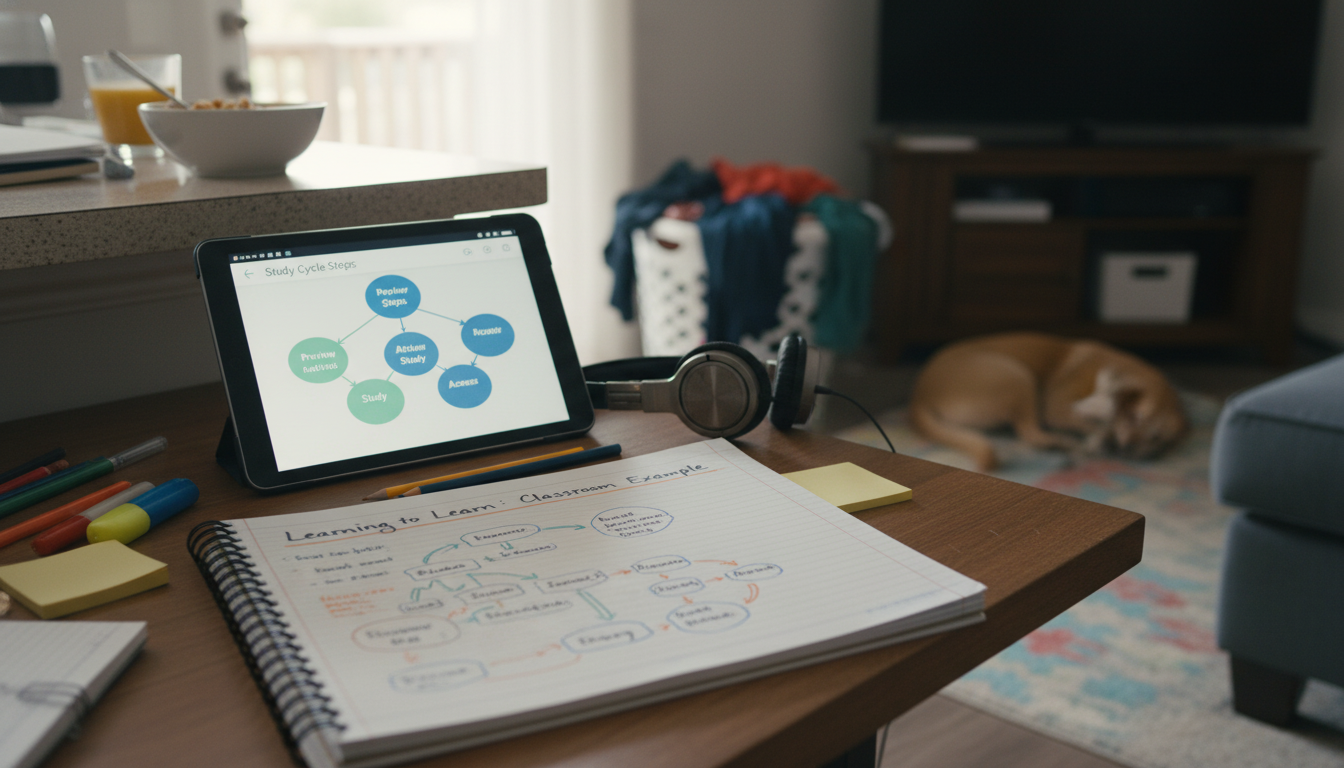
What is an example of learning to learn in the classroom?
An easy classroom example of “learning to learn” is when a student runs a short study experiment, checks the results, and then changes their approach based on what worked. Instead of only asking, “Did I finish the homework?” they ask, “How did I learn this best, and how can I repeat it?”
Example: A student builds a personal study system
Imagine a 7th grader preparing for a science quiz on cells and organelles. They decide to test two methods over two nights:
Night 1: They reread the chapter and highlight key terms for 30 minutes. At the end, they do a quick self-quiz from memory and realize they can’t recall much beyond a few definitions.
Night 2: They switch tactics. First, they write a short “brain dump” of everything they remember about the cell. Then they use flashcards to practice retrieval, and finally they correct mistakes by checking the textbook. Their self-quiz score improves noticeably.
The “learning to learn” part happens in the reflection: the student compares outcomes, notices that retrieval practice beat rereading, and chooses to use the second method for future units. They’re not just studying content; they’re improving the process that produces learning.
How a teacher can make this routine in any subject
Learning to learn becomes stronger when it’s repeated with small feedback loops. A teacher can support it with a simple cycle:
- Plan: Pick one strategy to try (practice problems, summarizing, teaching a peer, flashcards).
- Do: Use it for a short, timed session.
- Check: Measure learning with a quick quiz, exit ticket, or “explain it without notes.”
- Adjust: Keep what works, change what doesn’t, and write one sentence about why.
For a deeper look at building a repeatable system for studying smarter, see this guide: meta-learning 4-step system.
FAQ
How can students practice metacognition during homework?
They can predict what will be hardest before starting, self-test without notes at the end, and write a one-line takeaway about what strategy helped most and what to change next time.







Leave a comment