BJJ for Mental Clarity: Focus, Calm, and Better Resilience
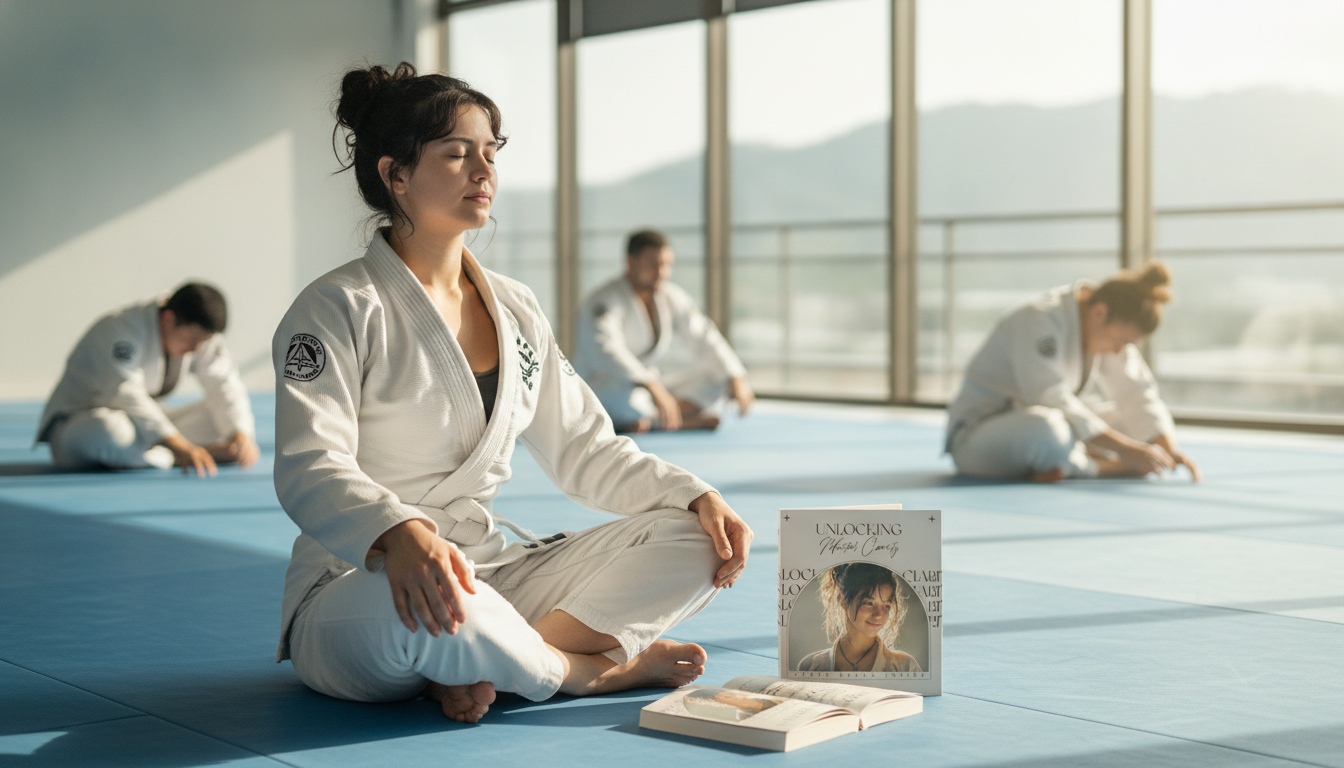
Unlocking Mental Clarity Through Brazilian Jiu-Jitsu: A Practical Guide to the Mental Health Benefits
Mental clarity often shows up as steadier focus, fewer racing thoughts, and a calmer response under pressure. Brazilian Jiu-Jitsu (BJJ) can support this by combining demanding problem-solving with controlled breathing, full-body movement, and a strong sense of community. The result is a training environment that repeatedly rehearses attention, emotional regulation, and recovery from stress—skills that carry into daily life.
Why BJJ can sharpen the mind
BJJ forces the mind into the present without requiring you to “think positive” or suppress stress. You’re simply too engaged to drift.
- High-stakes focus without real-world consequences: Sparring demands immediate attention to posture, grips, and balance, narrowing mental noise into one clear task.
- Constant problem-solving: Each position comes with constraints and options, training the brain to scan, choose, and commit—even when you’re tired.
- Embodied feedback loop: Technique improves when tension drops, so you learn relaxed concentration rather than frantic effort.
- Routine and structure: Scheduled classes and progressive learning reduce decision fatigue and build consistency.
This also aligns with broader health guidance on how movement supports the brain and body. For example, the CDC summarizes wide-ranging benefits of physical activity, including impacts on mood and overall well-being.
What mental clarity can feel like during training
Clarity doesn’t always feel like bliss. Often it feels like clean attention: simple, direct, and usable.
- A quieter internal dialogue: Attention shifts from worries to concrete cues—frames, hip angle, base, and pressure.
- More stable emotions: Frustration still appears, but recovery between rounds gets faster.
- A sense of present-moment awareness: Time can feel compressed during live rounds because attention is fully occupied.
- Cleaner decision-making: Fewer impulsive moves and more deliberate sequences, especially when breathing stays steady.
Many people notice the contrast most after class: thoughts feel less sticky, and the body feels “turned down” rather than keyed up.
Mental health benefits commonly linked to BJJ practice
BJJ is not a substitute for professional care, but it can be a strong complement—especially when training is consistent and paced appropriately.
- Stress relief through exertion and downshifts after training: A post-session calm is common as the body transitions out of a heightened state. The American Psychological Association explains how stress affects the body, which helps make sense of why recovery practices matter.
- Improved mood: Regular physical activity and social connection can support mood over time. The NHS notes that exercise can help with depression symptoms for many people.
- Greater confidence and self-efficacy: Learning to survive bad positions builds a durable “I can handle this” mindset.
- Better emotional regulation: Controlled exposure to discomfort teaches responses other than panic or shutdown.
- More resilient attention: Switching between drilling and sparring trains both sustained focus and rapid refocusing.
How common training elements map to mental skills
| Training element | What happens in class | Mental skill reinforced | Daily-life carryover |
|---|---|---|---|
| Positional sparring | Start in a constrained position and solve escapes/sweeps | Calm problem-solving under pressure | Handling tight deadlines or conflict without spiraling |
| Breath control | Exhale through effort; avoid breath-holding | Downshifting stress response | Lower reactivity during stressful conversations |
| Technique drilling | Repeat sequences with feedback | Focused attention and patience | Sticking with routines (study, work projects) |
| Tapping and resetting | Acknowledge limits and restart safely | Healthy boundaries and recovery | Letting go of mistakes and returning to tasks |
| Team culture | Partners help each other improve | Belonging and support | Reduced isolation; stronger social buffers |
How to unlock mental clarity with a beginner-friendly BJJ routine
A practical routine works best when it’s simple enough to repeat, even on busy weeks.
- Start with 2 classes per week for 4 weeks: Consistency matters more than intensity early on.
- Prioritize fundamentals: Posture, frames, hip movement, and basic escapes (mount, side control, back control).
- Use a single focus cue each round: Pick one theme (example: “elbows in” or “breathe on transitions”) and treat it like a mental anchor.
- Keep a two-line training note after class: (1) What felt calm, (2) what triggered panic or rushing.
- Add 5 minutes of downshift after training: Slow nasal breathing and gentle stretching to reinforce recovery.
For a structured, step-by-step approach that combines fundamentals and mindset habits, see Unlocking Mental Clarity Through Brazilian Jiu-Jitsu: A Guide to the Mental Health Benefits of Brazilian Jiu-Jitsu.
Managing anxiety and overwhelm on the mats
Early rounds can feel intense because your body interprets uncertainty as danger. The goal is to make the environment feel predictable and safe enough to learn.
Some people also benefit from broader stress-management tools outside class. Calm Your Body, Clear Your Mind, Balance Your Life: A Complete Guide to Natural Remedies for Cortisol Reduction can pair well with training by reinforcing recovery and downshifting habits.
Sleep, recovery, and mental clarity: making training work for the brain
If meal planning is a recurring friction point, Healthy Meal Plan & Recipe Collection can help simplify post-training nutrition so recovery stays consistent.
A guided path for deeper mental clarity through BJJ study
FAQ
How to unlock mental clarity?
Reduce cognitive overload with a repeatable routine: consistent movement, breath regulation, and one focus cue per round (like “exhale on effort”). After training, write a short reflection on what felt calm and what triggered rushing, then finish with a brief downshift (slow nasal breathing and stretching).
What does mental clarity feel like?
It often feels like quieter thoughts, stronger present-moment focus, and quicker emotional recovery after frustration. In sparring, that can look like fewer impulsive moves and more deliberate sequences; in daily life, it can look like less rumination and faster return to tasks after stress.
What to read in the Bible for mental clarity?
Many people find peace and focus through passages like Philippians 4:6–8, Psalm 23, and Psalm 46:10. Spiritual reading can complement training and professional support by reinforcing calming attention and hopeful perspective.












Leave a comment